

Walk-through metal detection · Passive · V3
BallistiSCAN.
Hockey-puck sensors that disappear into the doorway.
Conventional walk-through detection means a TSA-style archway in the entrance of your school, sanctuary, memorial, or lobby. BallistiSCAN does not. The sensing element is a pair of discs the size of a hockey puck — small enough to install inside existing door frames, entry millwork, or turnstiles. No archway. No pillars. No checkpoint silhouette. Every person who walks in is screened, passively, without breaking the line of foot traffic.
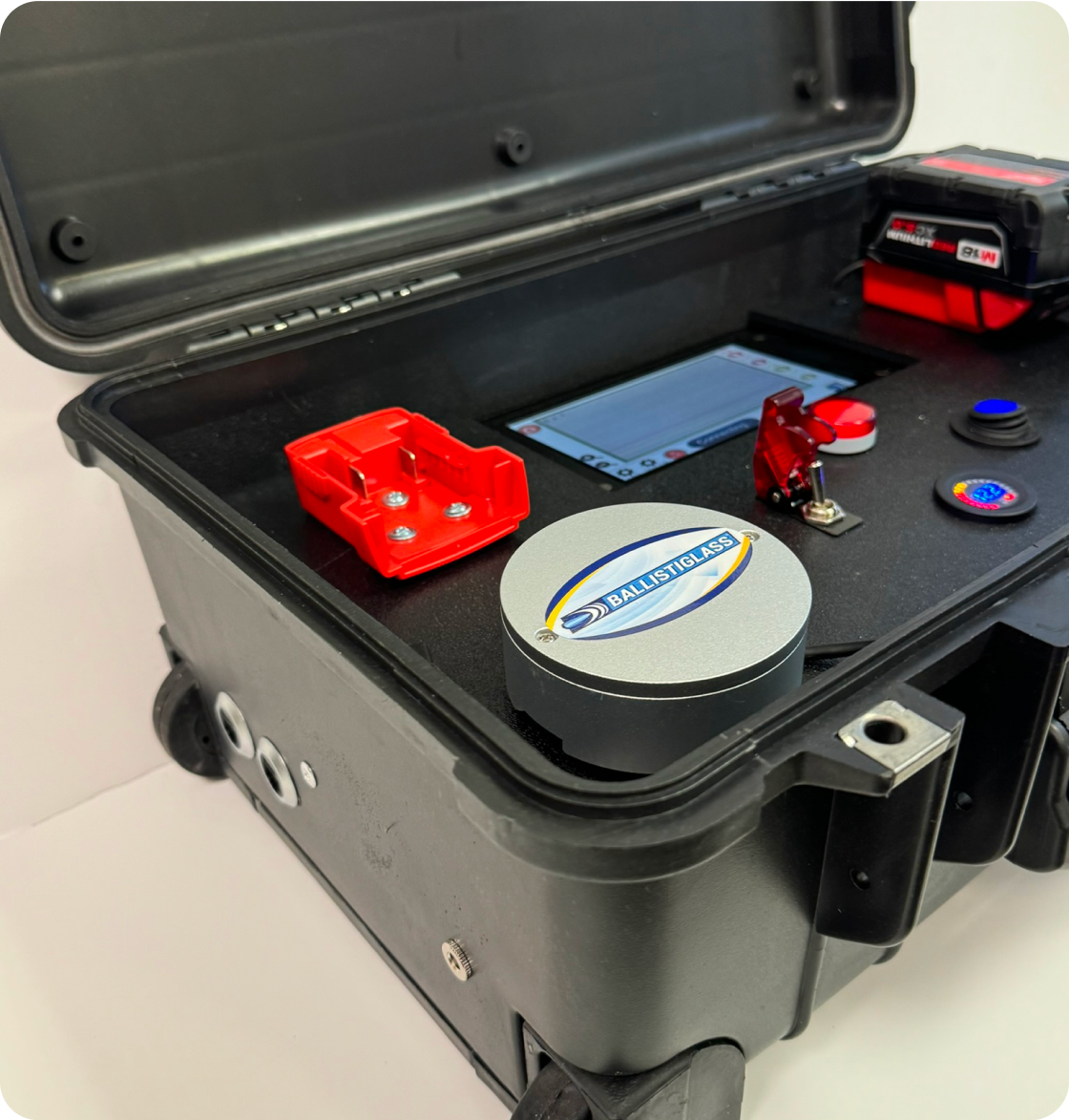
BallistiSCAN V3 — the puck-sized disc is the entire sensing footprint. Deploys in under five minutes.
The sensor itself
This is the entire sensing element.
One puck. One Ethernet drop. The connector at the bottom is a standard RJ45 — the same jack on the back of any office computer. That is the scale reference. The complete sensing footprint of a BallistiSCAN lane is two of these discs, mounted inside the door frame or the millwork on either side of the entrance. There is no archway because there is nothing to archway around.
Small. Portable. Barely noticeable. That is the point.
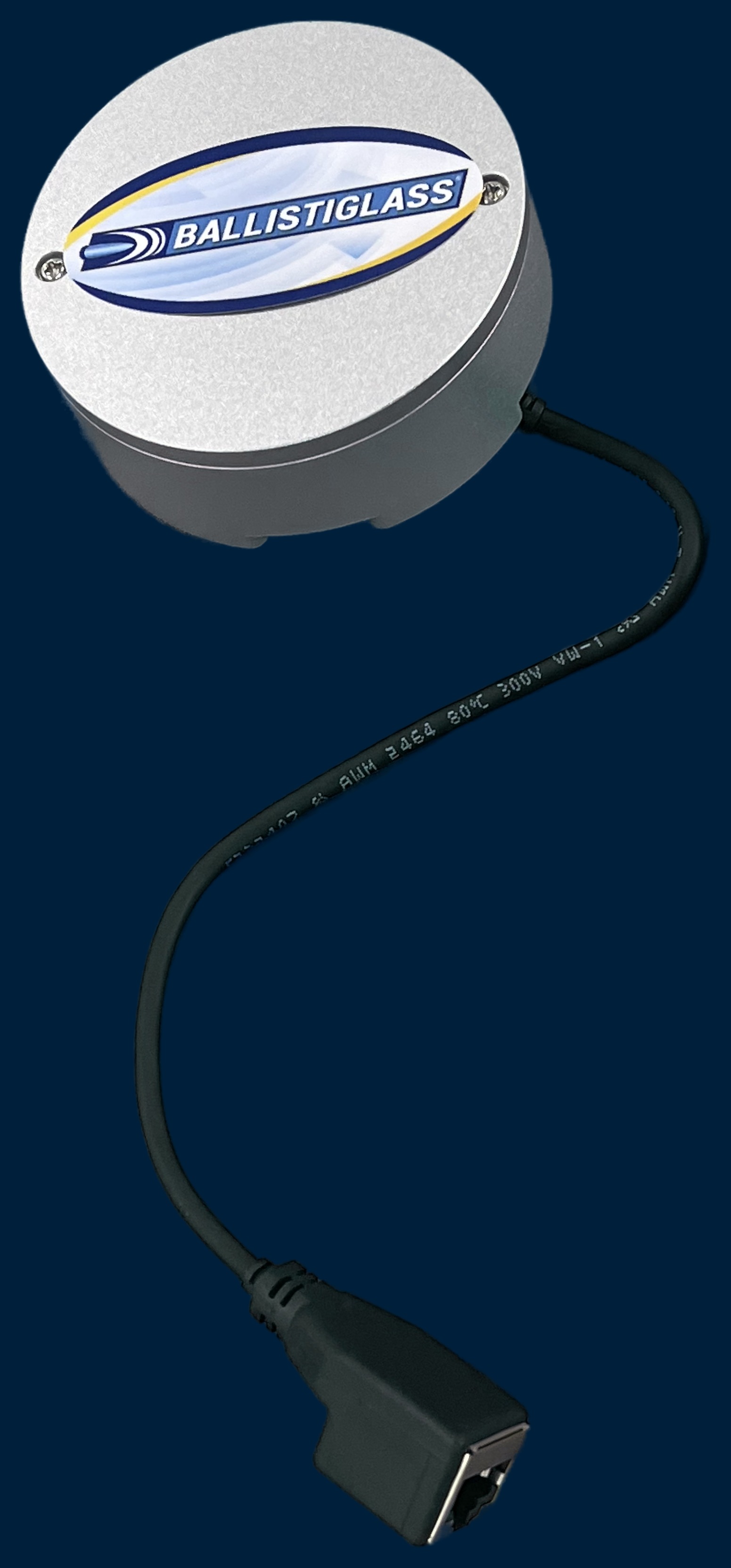
The puck is the sensor. The RJ45 jack is your scale reference.
In the field
Field deployment, public middle school.
A live deployment at a public middle school. Students walk in at normal pace. The detector reads every body that passes through the doorway.
Why passive
Passive screening at the entrance.
A line outside a school entrance is an exposure of its own. The same is true at a congregation on a Saturday morning, a healthcare facility on a Monday, or a museum on a holiday weekend. A visible queue tells anyone who might be planning something exactly where people will be standing, still, for the next ten minutes.
BallistiSCAN screens every person who walks through the door without introducing a stopping point. Foot traffic stays moving. The building stays operational on the days the building is most likely to be tested.
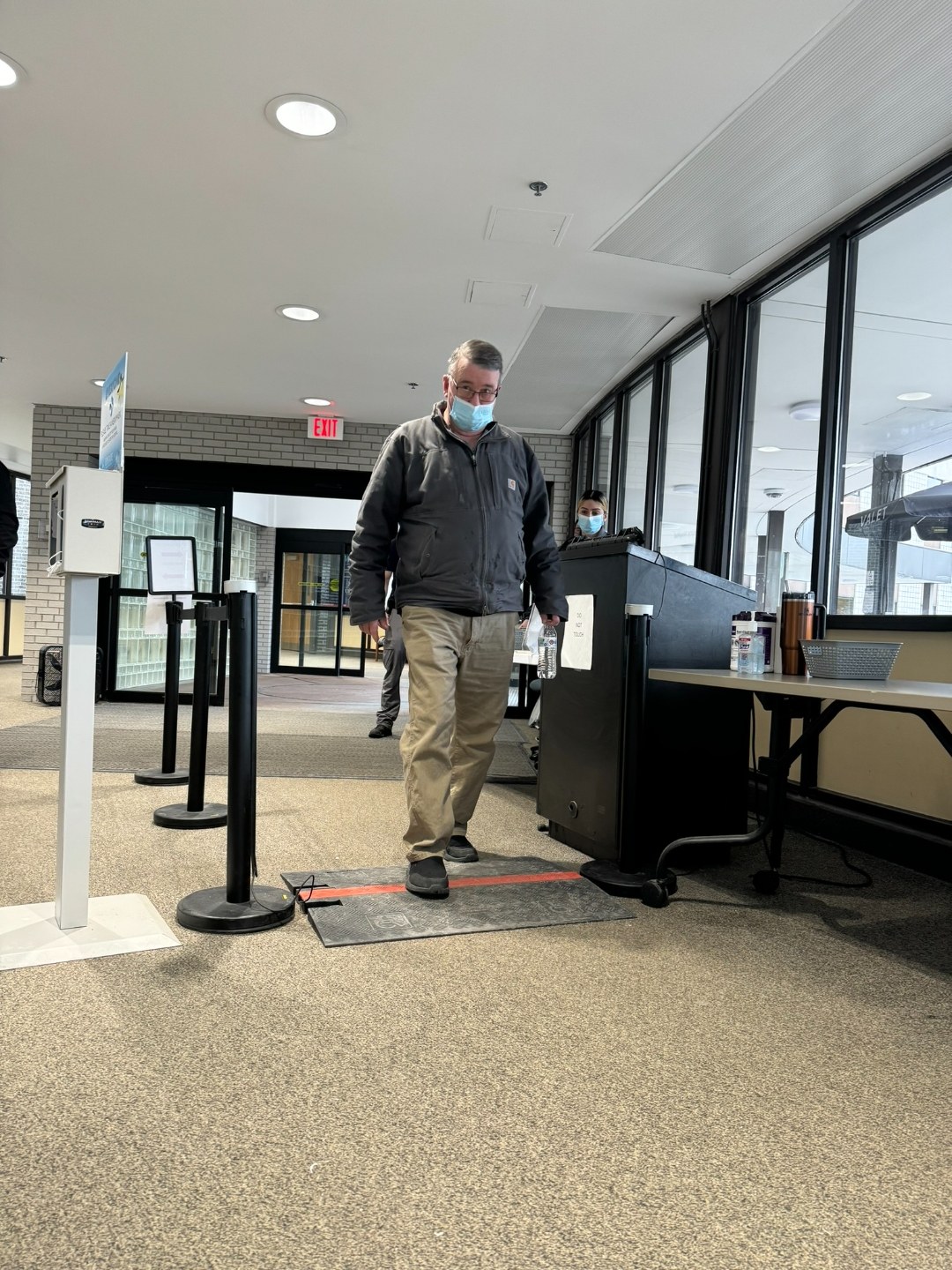
Upstate University Hospital · Syracuse, New York · public main entrance · New York State Police security detail.
Case study · Syracuse, New York
A year of confiscations at a hospital front door.
BallistiSCAN has been in continuous service at the main visitor entrance of Upstate University Hospital in Syracuse, New York, where the New York State Police staff the security detail. We pulled a year of weekly contraband data from the 2023 deployment.
- Zero firearms detected. A hospital is not a venue where someone tries to walk a long gun in.
- Knives, every day. Across roughly fifty weeks of operation, the lane confiscated knives at a rate of ten to twenty per day — a public hospital lobby that the public assumes is unscreened.
- Detected by the lane. Every confiscated item was surfaced by the BallistiSCAN sensor pair as visitors crossed the mat at normal walking pace. The line never stopped.
That is the case for passive screening at the entrance: it tells the building what is coming through the door, on the days the building is open and operational. No archway. No queue. No checkpoint.
Current generation
BallistiSCAN V3.
The third-generation unit. Smaller sensing footprint. Plug-and-play — the unit auto-calibrates to the doorway on power-up. The same passive, no-archway architecture.
Specifications
Specifications.
- Sensing footprint
- Two hockey-puck-sized sensor discs · mount inside door frames, entry millwork, or existing turnstiles
- Generation
- V3 · current production unit
- Unit weight
- Field kit 17 lbs · one-person deploy
- Deployment
- Indoor or outdoor · doorway-mounted · under five minutes
- Connectivity
- Wi-Fi · remote status · event logging
- Throughput
- Passive · screens every body in the doorway without stopping foot traffic
- Architecture
- Single-unit · no queue infrastructure · no lane hardware required
- Common applications
- School entries · houses of worship · healthcare · museums and memorials · government receptions · corporate lobbies
- Setup
- Plug-and-play · the unit auto-calibrates to the doorway on power-up · no on-site technician required
Spec sheet · PDF · 2 pages
Printable two-page specification with the full technical profile and deployment context.
Pairing
Pair with BallistiMAX.
BallistiSCAN and BallistiMAX are specified together in most of the full-envelope projects we do. The walk-through at the entrance reads who comes in. The glazing holds if someone decides to try anyway.
Request a specification.
Share the entrance condition. An associate from our specifications team will respond within one business day.